15 Crochet Shawl Patterns for Every Skill Level
Discover 15 stunning crochet shawl patterns for beginners to experts. Find free and paid designs, plus tips for choosing yarn and adjusting sizes.
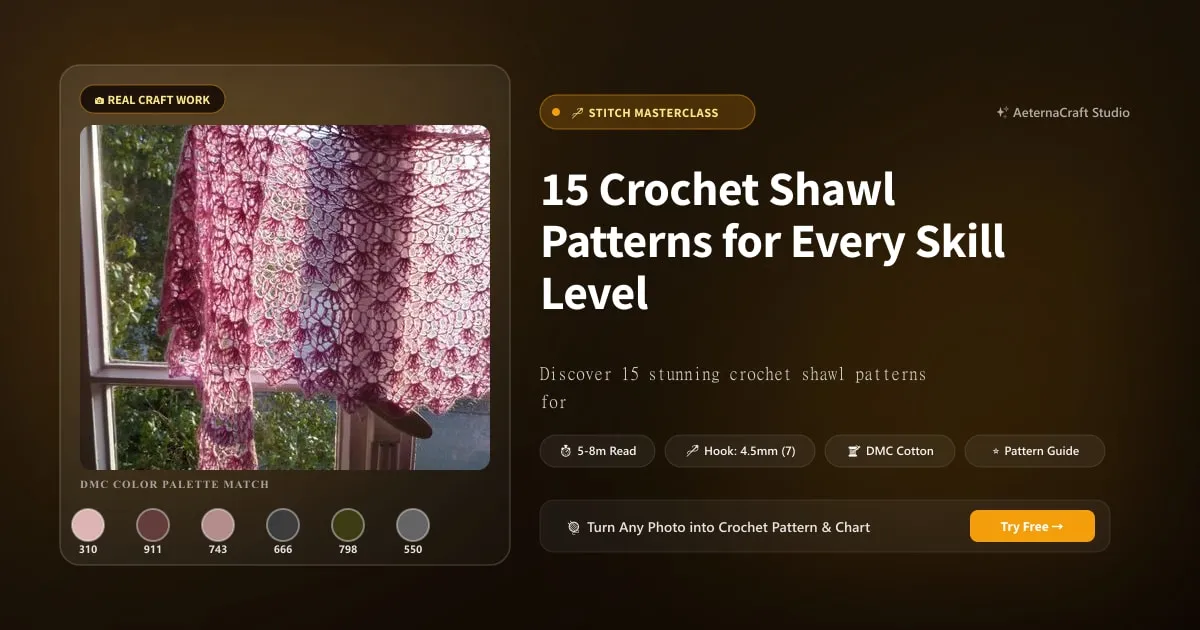
15 Crochet Shawl Patterns for Every Skill Level
Why Crochet Shawl Patterns Are Perfect for Every Season
Let’s be honest: I have a bit of a stash situation. It started decades ago, back when I was a young, impressionable crafter who thought buying every new yarn drop was a financial strategy. But as I’ve aged — and my closet has filled with the results of that strategy — I’ve realized that shawls are the ultimate wardrobe rescue hero. They aren’t just accessories; they’re wearable temperature control systems wrapped in beautiful texture.
I still remember the first time I wore a hand-crocheted shawl to a gallery opening in New York. The venue was freezing, naturally, and while everyone else was shivering in their delicate dresses, I was draped in a lightweight cotton lace shawl that caught the light beautifully. It wasn’t just about warmth; it was about presence. A crocheted shawl gives you an aura of intentionality. You didn’t just throw on a cardigan; you curated a look.
What I love most is the versatility across seasons. In the summer, nothing beats a shawl worked in mercerized cotton or silk blends using a larger hook, say a 5.0mm or even 6.0mm, to create those open, breathable lace patterns. It’s like wearing a second skin that protects you from the harsh afternoon sun or the aggressive air conditioning in grocery stores (we’ve all been there). Conversely, when winter hits, I switch gears entirely. I pull out my worsted weight wool or alpaca blends and my trusty 5.5mm to 6.5mm hooks. Suddenly, that same basic triangle shape transforms into a cozy cocoon. The drape changes, the warmth multiplies, but the satisfaction remains identical.
There is also something deeply comforting about knowing exactly what you are wearing. When you crochet your own shawl, you know exactly how it feels against your skin. No itchy acrylics if you hate them. No shrinking issues if you’re a gentle washer. And let’s talk cost for a moment. I’ve watched yarn prices climb higher than my blood pressure during a complex cable stitch. Buying a high-quality merino wool shawl at a boutique can set you back $100 or more. Yarn for that same shawl? Maybe $40. The difference isn’t just money; it’s the pride of wearing something that exists only because you made it. That feeling of accomplishment when you finish the final slip stitch is unmatched. It’s not just fabric; it’s hours of mindfulness, pattern reading, and muscle memory rolled into one wearable piece of art.
So, whether you’re looking for a layering piece for your wedding guest outfit or a snuggly wrap for reading by the fire, shawls offer a perfect blend of practicality and creativity. They are the Swiss Army knife of the crochet world — adaptable, essential, and infinitely expressive.
Choosing the Right Crochet Shawl Pattern for Your Skill Level
One of the biggest pain points I hear from fellow crafters is standing in front of a pattern listing, heart sinking because it mentions “cabling” or “filet crochet,” and thinking, “I can barely keep track of double crochet increases.” Fear not! We need to match the complexity of the pattern to where you are right now, not where you hope to be next year.
For beginners, I always recommend starting with shapes that forgive mistakes. A classic granny square triangle is your best friend here. Why? Because if you drop a stitch or miss a chain, it’s often hidden within the dense cluster of double crochets (dc). The rhythm is repetitive: chain space, three dc, chain space, repeat. It’s almost meditative. I once spent a whole weekend making a simple garter stitch rectangle shawl using bulky weight yarn and a J/10 hook. It was my first real “shawl.” It wasn’t pretty, and the edges curled like potato chips, but I finished it. That victory gave me the confidence to try lace later. Stick to patterns that use single crochet (sc), half double crochet (hdc), and standard double crochet. Avoid anything with intricate color changes or complex charts until you’re ready.
If you are hovering in the intermediate zone, this is where things get fun. This is the domain of shells, fan stitches, and basic lace motifs. Here, you’ll start encountering increases and decreases in specific places to shape the fabric. A popular choice is the “half-square” triangle or a simple fan stitch that creates a scalloped edge. At this level, you’ll also encounter filet crochet, which is essentially creating a grid of chains and posts to form a picture or texture. It sounds scary, but it’s just logical counting. If you can count to four and make a chain stitch, you can do filet crochet. Just take your time with the stitch count!
Advanced crafters, this is your playground. You’re looking at Tunisian crochet shawl patterns, intricate lace designs with picot edgings, or cables that require a cable needle or an extra hook behind your work. These patterns often involve reading graphs rather than written instructions. When I tackle a complex lace shawl with treble (tr) and double treble stitches, I find myself in a flow state where time disappears. These patterns demand precision. A missed increase in row 50 might mean your shawl is off-center by row 100. It’s frustrating if you make a mistake, but the resulting drape and elegance are worth the mental gymnastics.
So, ask yourself: Do I want to relax while watching TV (beginner-friendly dc/shell)? Do I want to challenge my counting skills (intermediate lace/filet)? Or do I want to show off my technical prowess (advanced Tunisian/cables)? There is no wrong answer, just the right challenge for today.
Essential Tips for Crocheting Shawl Patterns Successfully
Let’s talk about the stuff that makes or breaks a shawl. I’ve seen too many beautiful projects fail because of poor yarn selection or skipped blocking steps. First up: choosing your yarn and hook. The interplay between the two is magical. If you use a stiff, non-drapey yarn like some acrylics with a small hook, you’ll end up with a rigid board, not a flowing shawl. For a beautiful drape, I generally recommend natural fibers. Wool is springy and warm; alpaca is incredibly soft and drapes heavily but can stretch out over time; cotton is crisp and holds shape well but offers no warmth.
A common question I get is, “How big does my hook need to be?” Generally, you want a hook that allows the yarn to relax. For fingering weight lace yarn, don’t be afraid of a small hook like a 2.5mm or 3.25mm, but ensure the tension is loose. For worsted weight, a 5.0mm or H/8 hook is standard. If the pattern says use a specific hook, try it first. If the resulting fabric feels tight and crunchy, go up a size. Drape is king in shawls.
Once you’ve picked your materials, let’s discuss adjusting size. Most shawl patterns are written in repeats. If you want a bigger shawl, you add multiples of the repeat. If you want a smaller one, you subtract them. For triangular shawls, check the increasing formula. If the pattern increases 3 stitches at the start and end of every right-side row, adding more rows will make it longer, not wider. To make it wider, you’d need to increase more frequently or start with a longer foundation chain. Always calculate your desired dimensions before you cast on. I learned this the hard way when I made a shawl for a tall friend and realized halfway through that it would only reach her knees. Ouch.
Finally, we must address blocking. I cannot stress this enough: Block your shawl. It is not optional. Blocking opens up lace stitches, straightens edges, and evens out your tension. For wool shawls, wet blocking works wonders. Soak it in lukewarm water with a bit of wool wash, roll it in a towel to remove excess water, and pin it out on a blocking mat to the correct dimensions. Let it dry completely. For cotton or acrylic, steam blocking is safer. Use an iron on the steam setting, hovering over the fabric without touching it directly. You’ll see the magic happen in real-time as the stitches bloom. Skipping this step is like baking a cake and never letting it cool — it just doesn’t look right.
Top 5 Free Crochet Shawl Patterns to Try Today
Ready to dive into some actual projects? Here are five styles that cover a range of techniques and are widely available as free patterns online.
Classic Triangle Lace Shawl
This is the quintessential shawl. Worked from the top down or side-to-side, it features a center spine with increases on either side. Look for patterns that use a combination of single crochet (sc) and double crochet (dc) clusters to create floral motifs. The beauty here is in the progression. Watching the shawl grow row by row is incredibly satisfying. I suggest using a lightweight cotton-linen blend to emphasize the lace details.
Easy Crochet Rectangle Shawl
Don’t underestimate the rectangle. It’s essentially a long scarf with flair. These are often worked in garter stitch or simple ribbing. They are perfect for quick gifts because they don’t require shaping math. Look for patterns that incorporate texture stitches, like front post double crochet (fpdc), to add interest without complexity. A rectangle shawl is versatile — you can wear it tied as a headband, draped as a stole, or wrapped around your shoulders twice for maximum coziness.
Modern Asymmetric Shawl
For the trendy crafter, asymmetric shawls are all the rage. These pieces aren’t symmetrical triangles; they might have one long side and one short side, or a diagonal edge. This design challenges you to think outside the box regarding stitch placement. Using self-striping yarn with an asymmetric pattern creates a stunning visual effect where the stripes align differently on each side. It’s a great way to use up scraps, too, since you can change colors arbitrarily.
Crochet Crescent Shawl
The crescent shape is elegant and wraps snugly around the neck and shoulders. These are typically worked in rows along a curved edge. The challenge here is maintaining the curve without distorting the fabric. Look for patterns that use shell stitches or fan stitches to build out the curve organically. A crescent shawl in a soft alpaca blend is luxurious and looks expensive, even though it’s just yarn and hook.
Boho Fringe Shawl
Fringe adds movement and texture. A boho-inspired shawl often uses a simple base stitch, like half double crochet (hdc), to create a sturdy fabric, then goes to town with fringe. You can add tassels, braided fringe, or simple cut fringe. The key here is color choice. Earth tones, terracottas, and creams work best. I love adding colorful pom-poms to the corners for a playful touch. This style is forgiving and focuses more on the vibe than precise stitch counting.
Where to Find More Crochet Shawl Patterns and Inspiration
Where do you go when you’re stuck? The internet is vast, but not all sources are created equal.
Best Websites for Free Patterns: Ravelry is the gold standard. It’s not just a library; it’s a community. You can filter by yarn weight, difficulty, and even user gauge. LoveCrafts is another excellent resource with a strong social component. AllFreeCrochet.com aggregates patterns from various designers, making it easy to browse trends. When using these sites, pay attention to the comments. Other users often note if a pattern has errors or suggests yarn substitutions that work better than the designer’s original choice.
Paid Patterns and Designer Recommendations: While free patterns are great, paid patterns are often more thoroughly tested. Designers like Doris Chan are legendary for their precision and beautiful photos. Her patterns are investments. You get clear instructions, high-resolution charts, and often video tutorials. Other notable designers include Dora Ohrenstein, who teaches extensively about fit and function. Buying a paid pattern supports the artist and ensures you’re getting a polished product. The difference in instruction clarity is often night and day.
Using Social Media for Inspiration: Pinterest is a treasure trove for visual ideas. Search for hashtags like #crochetshawlpatterns, #crochetlace, or #handmadeaccessories. Instagram is great for seeing shawls in action on real people. YouTube is invaluable for visual learners. Watching someone else execute a tricky stitch or a specific increase method can clear up confusion faster than reading a paragraph of text. Follow creators who specialize in shawls — they often share tips on yarn choices and blocking techniques that aren’t in the written pattern.
Frequently Asked Questions
How much more yarn do I need if I double the size of my crochet shawl?
Doubling the size of your shawl typically requires about four times the original yardage, because area scales with the square of linear dimensions. For a small lace shawl using 400 yards of fingering weight, doubling it means roughly 1,600 yards. Always buy an extra ball or two to be safe.
Can I use a blanket pattern for a shawl?
Technically yes, but practically maybe not. Blankets are designed for stiffness and durability, often using tighter tensions and heavier yarns. Shawls need drape. If you adapt a blanket pattern, switch to a lighter yarn weight or a larger hook to loosen the fabric. Also, blankets are usually rectangular, so you'll need to modify the pattern significantly to add increases or decreases for a shawl shape.
How do I prevent my crochet shawl from curling?
Curling is usually caused by uneven tension or stitch imbalance. Single crochet tends to curl; double crochet lies flatter. If you're working in sc, switch to hdc or dc for the body of the shawl. Another cause is binding off too tightly — keep your bind-off loose. Finally, proper blocking often fixes minor curling. Pin your edges flat and let the fibers relax.
Related Posts
Botanical Monstera Mini Tapestry Free Pattern
Crochet your own botanical monstera mini tapestry wall hanging with this free beginner-friendly pattern, row-by-row color chart, and step-by-step tips.
BeginnerHow to Change Colors in Crochet: 3 Seamless Techniques
Master seamless color changes in crochet with 3 easy techniques. Avoid gaps, tangles, and tension issues for perfect stripes every time.
Try Our Free Crochet Tools
Turn Your Photo Into a Crochet Pattern
Upload any photo and our AI generates a pixel-perfect crochet pattern with real yarn color matching in seconds.
Try AeternaCraft Studio Free →Calculate Yarn for Any Resize
Free amigurumi yarn & resizing calculator. Change hook, switch yarn, or scale a whole pattern — instant results with PDF export.
Open the Calculator →