Crochet Tattoo Ideas: 15 Designs & Aftercare Tips
Discover crochet tattoo inspiration, design tips, and aftercare for fine-line ink. Learn how to honor your craft with permanent art.
Why Get a Crochet Tattoo?
There’s something deeply intimate about sitting down with a ball of yarn and a hook. It’s meditative, yes, but it’s also physical. You’re shaping fiber into form with your own two hands. When I decided to get my first crochet-themed tattoo—a delicate, fine-line single crochet chain wrapping around my left wrist—I wasn’t just trying to look cool. I was anchoring a part of my identity I’d spent 20 years cultivating.
The connection between craft and body art runs deeper than most people realize. For many of us, crochet isn’t just a hobby; it’s a coping mechanism, a source of pride, and a bridge to community. In the vast internet forums where crafters gather, you’ll find endless threads dedicated to this topic. One user on r/crochet mentioned, “It feels like wearing my therapy.” Another wrote, “My grandmother taught me to crochet when I was 7. Getting this tattoo felt like finally thanking her properly.” These aren’t just ink; they’re reminders of patience, of late nights spent perfecting tension, and of quiet joy.
But beyond the sentimental value, there’s the sheer aesthetic beauty of crochet motifs. When translated into permanent ink, these designs have a unique charm. The most common motif is the hook itself—whether a vintage brass hook or a sleek aluminum ergonomic handle, it’s an iconic silhouette. Then there’s the yarn ball. A perfectly rendered skein of yarn suggests texture and volume, playing wonderfully with shading techniques.
Stitch patterns make stunning geometric tattoos. Granny squares are the king of this category. Their grid-like structure translates beautifully into blackwork or dot-work styles, creating a hypnotic, tessellated effect on the skin. Cables are another favorite; the interlocking strands mimic human DNA or floral vines, offering rich texture in both traditional color and stark monochrome.
For those who enjoy whimsy, amigurumi characters are rising in popularity. I saw a stunning tattoo recently of a tiny, stylized elephant made entirely of visible stitches. It’s playful but technically impressive because it captures the “crunchiness” of tight amigurumi stitching. Flowers are timeless, but in crochet, they carry the weight of handmade imperfection. A crocheted rose has a different soul than a photorealistic one—softer, rounder, distinctly human.
And let’s not ignore text-based options. Words like “Hook,” “Craft,” or even a single stitch notation like “[sc 6 in rnd]” hold immense power for those who know the language. It’s a secret handshake, a signal to other crafters that you speak the dialect of loops and chains.
So why ink it? Because crochet teaches us that mistakes can be unraveled and fixed, that patience yields beauty, and that we can create warmth from nothing. Putting that philosophy permanently on your skin is a powerful statement. It says, “I make things. I am patient. I am creative.” Honestly, after decades of tangled yarn and dropped stitches, I think we’ve earned the right to wear our passions proudly.
Designing Your Crochet Tattoo
Designing a tattoo that celebrates crochet requires a specific set of eyes. You can’t just walk into any shop and expect them to understand the nuance of a half-double crochet versus a single crochet. The difference in thickness, in the “V” shape, in the drape—it matters. This is where choosing the right artist becomes critical.
First, find someone who specializes in fine linework or illustrative styles. If an artist’s portfolio is dominated by bold tribal pieces or heavy blackwork block-ins, they might struggle with the subtleties of crochet texture. You want an artist who understands negative space, because crochet is often defined by the holes—the eyes of the stitches—as much as the threads themselves.
Before booking your consultation, prepare a few questions. Don’t be afraid to ask: “Have you worked with textile or fiber arts motifs before?” or “Can you show me examples of geometric patterns in your work?” I once made the mistake of going to an artist who was fantastic with realism but terrible with precision lines. My first attempt at a stitch pattern looked muddy and vague. I had to go back to a different artist, one who treated the page like graph paper. That second artist asked me to bring my actual yarn and hook to the appointment so she could study the tension. That level of dedication is what you’re looking for.
Placement is equally crucial. Crochet tattoos, especially those with detailed stitch patterns, age differently depending on where they live on your body. The forearm is a classic choice because the skin is relatively flat and stable. However, the inner forearm moves significantly when you reach or type. Over 10 years, those fine lines might blur slightly. If you want maximum longevity for intricate details like amigurumi faces or complex granny square grids, consider areas with less constant stretching, like the upper arm, ribcage (though painful), or calf.
Speaking of pain, let’s talk about it. Fine linework often requires a steady hand and sometimes longer sessions—my wrist piece took 2.5 hours. If you have a low pain tolerance, avoid placing tiny, detailed stitches over bony areas like the shin or ankle unless you’re prepared for some tears—of emotion, not just skin. A shoulder piece allows for larger designs, giving you room to expand a simple hook into a full sleeve of tangled yarn and tools, but remember that the deltoid muscle moves when you lift your arm, which can cause subtle distortion over time.
Finally, decide between custom and flash. Flash tattoos are pre-designed sheets available in the shop. They’re cost-effective and quick, but they lack personalization. A custom design, however, allows you to incorporate your story. Maybe you want your first-ever crochet project—a lopsided dishcloth—recreated in fine line. Or perhaps you want to include your favorite hook size, like a 4.0mm, woven into the border of a granny square.
I highly recommend sketching your idea out on graph paper. If you’ve ever drafted a crochet pattern, you already know how to think in grids. Bring that logic to your artist. Show them how the stitches connect. Discuss colors: should it be realistic yarn colors, or stick to black and grey? Realistic colors can fade faster and blend into each other, losing detail. Black and grey with fine linework tends to age more gracefully, preserving the crispness of stitch definition.
Aftercare for Fine Line and Detailed Tattoos
You’ve picked the perfect artist, designed your dream crochet tattoo, and now the needle has finished its work. Congratulations! But here’s the hard truth: the work isn’t done. For fine-line crochet tattoos, the aftercare phase is where many people falter, leading to blurred lines and lost detail within months.
In the first 24 to 48 hours, your tattoo is essentially an open wound. Because crochet designs rely heavily on thin, precise lines, you must treat your skin with extreme gentleness. Wash the area gently with unscented, antibacterial soap and lukewarm water. Do not scrub. Scrubbing will remove ink that hasn’t fully settled into the dermis, particularly the tiny dots and fine hairline strokes that define the texture of yarn. Pat dry with a clean paper towel—never use a cloth towel, which can harbor bacteria and snag on healing skin.
Moisturizing is key, but too much moisture is dangerous. You want a thin layer of ointment (like Aquaphor or a specialized tattoo balm) for the first 3 days, then switch to a light, fragrance-free lotion. If you slather on thick cream, the skin can become suffocated, leading to scabbing. Thick scabs are the enemy of fine lines. When a scab falls off naturally, it takes ink with it. If you pick or scratch, you risk creating white spots in your intricate stitch pattern, which can ruin the illusion of texture.
Avoid sun exposure completely during the healing process. UV rays break down ink pigments rapidly, but fine lines fade faster than bold blocks of color. Even incidental sun exposure through a window can affect the healing tattoo. Once healed, you must commit to a strict SPF routine. I cannot stress this enough: apply sunscreen every single day. For a crochet tattoo, where the “yarn” is made of delicate lines, fading turns into blurring. Over time, without sun protection, a distinct single crochet pattern might merge into a gray smudge.
Long-term maintenance involves regular moisturizing. Dry skin reflects light differently and can make tattoos look dull. Keeping the skin supple helps the ink pop. Also, consider physical wear and tear. If you work with your hands extensively—if you’re still crocheting daily, handling rough wool, or working in a lab—you might notice slight fading in high-friction areas. This is normal.
Touch-ups are part of life for detailed tattoos. Plan to revisit your artist every few years for minor corrections. Many artists offer complimentary touch-up sessions within the first year. Use this! If a line has faded or spread slightly, a quick touch-up can restore the crispness. Think of it like re-threading a hoop or fixing a dropped stitch—it keeps the whole piece intact.
15 Crochet Tattoo Design Ideas to Inspire Your Next Ink
Looking at other people’s work is the best way to spark your own creativity. On platforms like Instagram and Reddit, specifically in communities like r/tattoos and r/crochet, there’s a treasure trove of inspiration. Here are 15 crochet tattoo design ideas that have been resonating with the craft community, organized by motif and style.
1. Fine-Line Single Crochet Chain
A delicate chain stitch wrapping around the wrist or ankle. This is the most iconic crochet tattoo — minimal, elegant, and instantly recognizable to anyone who works with yarn. Fine-line style preserves the distinctive “V” shape of each stitch.
2. Vintage Brass Crochet Hook
The classic silhouette of a vintage brass hook makes for a timeless piece. Whether rendered in fine linework or subtle shading, the hook is the most recognized symbol of the craft. Place it on the forearm for maximum visibility.
3. Ergonomic Aluminum Hook
A modern take on the hook motif — sleek, minimal, and geometric. This design suits those who prefer contemporary aesthetics over vintage charm. The clean lines of an ergonomic handle translate beautifully into blackwork.
4. Yarn Ball with Shading
A perfectly rendered skein of yarn suggests texture and volume, playing wonderfully with shading techniques. This design works especially well in stippling or dotwork, where the gradient of dots mimics the fuzz of real fiber.
5. Granny Square Grid
Granny squares are the king of geometric crochet tattoos. Their grid-like structure translates beautifully into blackwork or dotwork styles, creating a hypnotic, tessellated effect on the skin. Best placed on flat areas like the upper arm or calf.
6. Cable Stitch Pattern
Cables are a favorite for texture lovers. The interlocking strands mimic human DNA or floral vines, offering rich texture in both traditional color and stark monochrome. Works best as a medium-to-large piece on the ribcage or thigh.
7. Amigurumi Character
A tiny, stylized amigurumi animal — like an elephant or bunny — made entirely of visible stitches. It’s playful but technically impressive because it captures the “crunchiness” of tight amigurumi stitching. Perfect for the forearm or shoulder.
8. Crocheted Rose
Flowers are timeless, but in crochet, they carry the weight of handmade imperfection. A crocheted rose has a different soul than a photorealistic one — softer, rounder, distinctly human. Place behind the ear or on the wrist for a delicate statement.
9. Text-Based Stitch Notation
Words like “Hook,” “Craft,” or even a single stitch notation like “[sc 6 in rnd]” hold immense power for those who know the language. It’s a secret handshake, a signal to other crafters that you speak the dialect of loops and chains.
10. Micro-Realism Granny Square
Artists are shrinking entire granny squares down to the size of a postage stamp, placing them behind the ear or on the side of a finger. The detail required is staggering, but the payoff is a hidden gem that only you and your closest friends know about.
11. Japanese Irezumi Hybrid
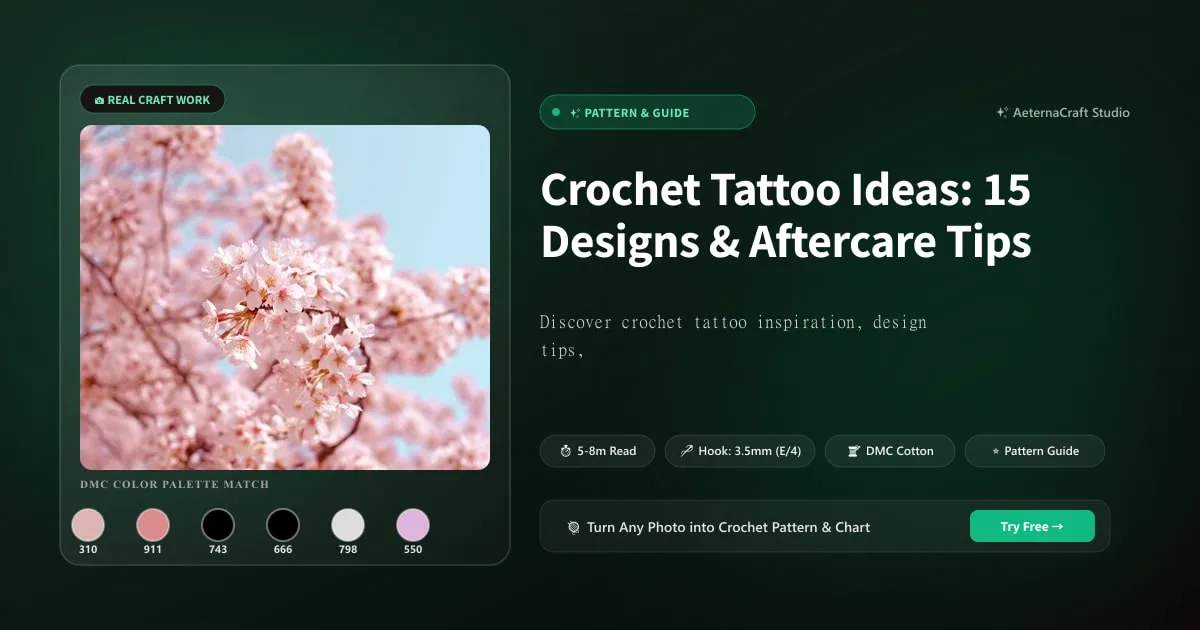
Integrating crochet elements into traditional Japanese irezumi style. Imagine koi fish woven from yarn patterns, or cherry blossoms constructed from chain stitches. It blends cultural heritage with modern craft in a visually stunning way.
12. Project Journal Timeline
A timeline of tattoos representing major milestones: your first completed hat, your first amigurumi, and your current obsession. Start with a small hook on the thumb and a yarn ball on the index finger, connected by a chain of stitches running up the wrist.
13. Hook and Pen Hybrid
A crochet hook crossed with a pen and paper — celebrating the multifaceted nature of your creative life. We are not just crafters; we are writers, musicians, thinkers. Your tattoo can reflect that whole identity.
14. Yarn Unraveling into Notes
A skein of yarn unraveling into musical notes. This hybrid design is perfect for those who express themselves through multiple mediums. Keep the central motif clear — clarity is the friend of longevity.
15. Stippling Dotwork for Fuzzy Texture
Ask your artist about stippling (dot work) for that fuzzy, woolly texture. It’s less about sharp lines and more about density of dots. This is perfect for depicting the fluffiness of an alpaca sweater or the fuzz of a mohair blend.
Designing Your Own Crochet Tattoo
If you’re feeling stuck or don’t have an artist’s eye, you can design your own ideas. Start with graph paper. Draw your desired stitch pattern using standard symbols. Use black squares for filled stitches and white squares for gaps. This binary view helps you see how the design will translate to solid lines and negative space. You can also use digital tools. Apps like Procreate allow you to trace over photos of your own crochet projects. Take a high-resolution photo of a textured swatch, overlay it with a sketch, and simplify the details. Remember, tattoos lose detail under the skin. What looks intricate in a macro photo might look like a blob when tattooed. Simplify the curves. Thicken the lines slightly.
Consider the interplay of textures. A smooth background with a raised, embossed-looking crochet design can be achieved through shading techniques. Lastly, don’t be afraid to combine mediums. Just ensure the central motif remains clear. Clarity is the friend of longevity. A busy composition with too many competing elements will age poorly. Keep your main subject focused, and let the background be subtle. Your crochet tattoo should be a celebration of your skill, patience, and love for the craft — a permanent reminder that you can create beauty from simple loops.
Frequently Asked Questions
What are the best crochet motifs for tattoos?
Popular motifs include crochet hooks, yarn balls, stitch patterns like granny squares or cables, amigurumi characters, and text-based designs like 'Hook' or stitch notations. Fine-line and blackwork styles work best for preserving stitch detail.
How do I find an artist for a crochet tattoo?
Look for artists specializing in fine linework or illustrative styles. Ask if they've worked with textile motifs before, and bring your actual yarn and hook to the consultation so they can study the tension. Avoid artists who only do bold tribal or heavy blackwork.
How do I care for a fine-line crochet tattoo?
Wash gently with unscented antibacterial soap, pat dry with paper towels, and apply a thin layer of ointment for the first 3 days. Avoid thick creams that cause scabbing. Use SPF daily once healed to prevent fading and blurring of fine lines.
Related Posts
DIY Doily Wall Art: 7 Steps to a Stunning Display
Learn to arrange, frame, and hang doilies as wall art with tips on layout, blocking, and preserving delicate crochet pieces.
AdvancedAnti-Piracy Sweater: Crochet Your Own Statement Piece
Learn to crochet an anti-piracy sweater inspired by the 2000s ad, with tips on avoiding AI pattern scams and customizing your design.
Try Our Free Crochet Tools
Turn Your Photo Into a Crochet Pattern
Upload any photo and our AI generates a pixel-perfect crochet pattern with real yarn color matching in seconds.
Try AeternaCraft Studio Free →Calculate Yarn for Any Resize
Free amigurumi yarn & resizing calculator. Change hook, switch yarn, or scale a whole pattern — instant results with PDF export.
Open the Calculator →